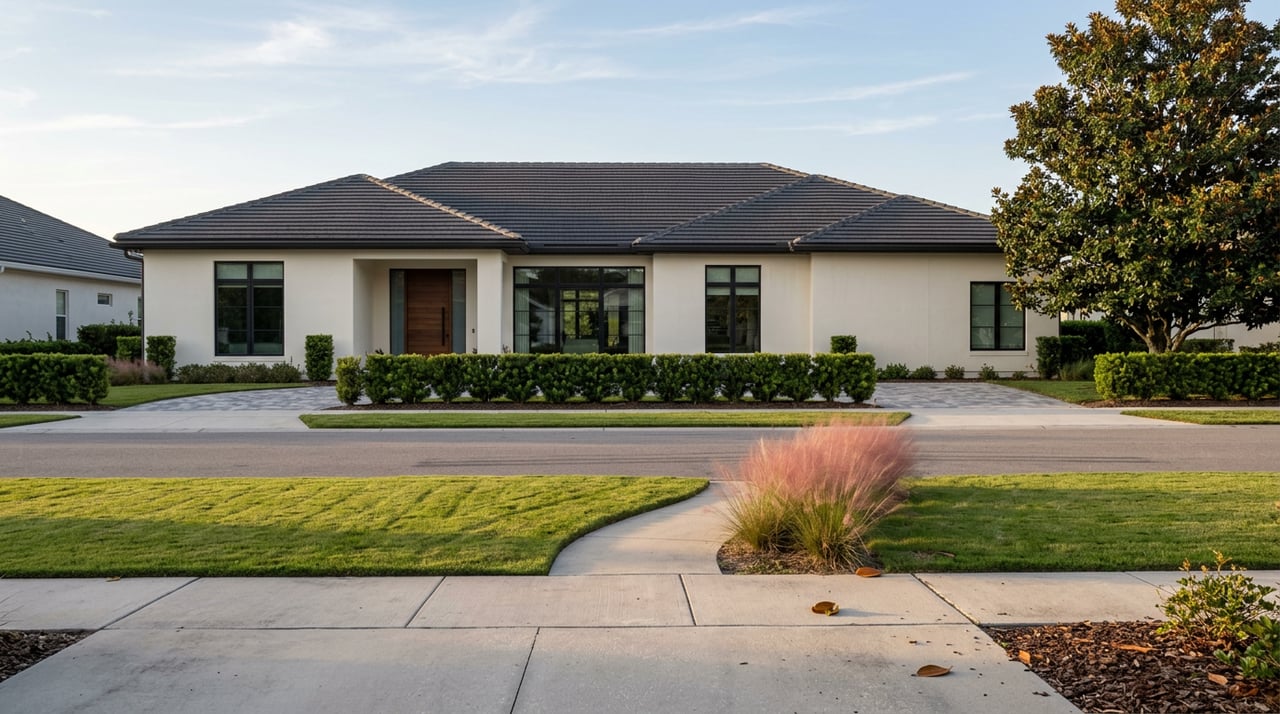
Randal Park Orlando Community Life Beyond the Amenities
August 13, 2026
August 13, 2026
A resident walking the path behind their lake in Randal Park recently noticed something that had nothing to do with the community calendar: otters, living in the conservation area on the back side of the water, and a handful of kids casting fishing lines into water whose fishing rules were unclear. The post went up on Nextdoor, where neighbors discussed the sighting and fishing activity.
That exchange adds a different kind of detail to the picture of Randal Park. The clubhouse calendar describes scheduled activities, while questions about the conservation lake offer another view of daily life in the neighborhood.
Randal Park was built with a social calendar in mind, and it shows. The community's clubhouse, Randal House, anchors the resident experience with a resort-style pool, a splash pad for younger kids, and a fitness center that keeps people from having to drive anywhere to get a workout in. It's the kind of amenity package that master-planned communities in the Lake Nona area lean on heavily, and Randal Park's version is well used.
The five-acre Central Park at the heart of the neighborhood is where the actual social calendar plays out. On a rotating basis, residents can expect:
This is the scheduled side of Randal Park, represented by its clubhouse and park events. The conservation lake adds another part of the neighborhood's day-to-day picture.
Randal Park has eight separate parks threading through it, plus a dog park and a network of walking trails connecting the pockets of green space. The lake and its conservation area are another part of the neighborhood where questions about use have come up.
The Nextdoor discussion described otters in the conservation area and children fishing from the concrete culverts along the back of the lake. One neighbor said the children had told them they had permission to fish anywhere. Adults were also described as using the space during lunch hours. The discussion raised a question about whether the HOA's rules had changed.
The discussion does not resolve what fishing rules apply. It illustrates how questions about shared spaces can arise alongside a neighborhood's scheduled activities.
Randal Park's practical geography does a lot of quiet work that residents mostly take for granted until they need it. Sun Blaze Elementary sits right on Randal Park Boulevard, inside the neighborhood itself, which means the school run doesn't require leaving the community. An Orlando Health Emergency Room sits on that same main boulevard, which matters more than it sounds like it should when someone in the house has a bad night.
For groceries, the Publix at Shoppes at Storey Park sits at the intersection of Dowden Road and State Road 417, a short drive from the neighborhood entrance. It's not a destination shopping center. It's the kind of place you go because it's on the way to everything else, which is exactly what a neighborhood grocery anchor is supposed to be.
Dowden Road itself connects out to the 417 Greeneway within about a mile of the neighborhood, and from there it's a short run to the Beachline Expressway. That's the corridor most Randal Park residents use for the commute downtown or the trip out to the coast, and it's also the corridor the City of Orlando has been paying closer attention to lately.
The City of Orlando held a community meeting specifically for Randal Park residents about new and future traffic patterns for the neighborhood, with a presentation by a city commissioner and the city's Traffic and Engineering team.
The commute out to the 417 during peak hours is another part of the area's day-to-day travel picture. The meeting gave residents a chance to hear directly from the city team about the neighborhood's traffic planning.
Together, these details describe several parts of daily life in Randal Park: scheduled community activities, questions about the conservation lake, traffic patterns discussed at a city meeting, and nearby everyday conveniences.
For anyone considering a move, looking at both scheduled amenities and everyday routines can help put the neighborhood in context.
If you're already living in Randal Park and any of this sparks a question about your own property, whether that's understanding how the neighborhood's growth might affect value down the line or just wanting a second opinion from someone who tracks this market closely, Anthony L. Santos is glad to talk it through. Get in touch anytime.
This article is general information, not legal, tax or financial advice. Consult a qualified professional about your situation.
Stay up to date on the latest real estate trends.
Whether you are a first-time buyer, a seasoned investor, or somewhere in between, I bring the market knowledge and personal attention that make all the difference.
ADDRESS 350 North Lake Destiny Rd # 116 Maitland, FL 32751